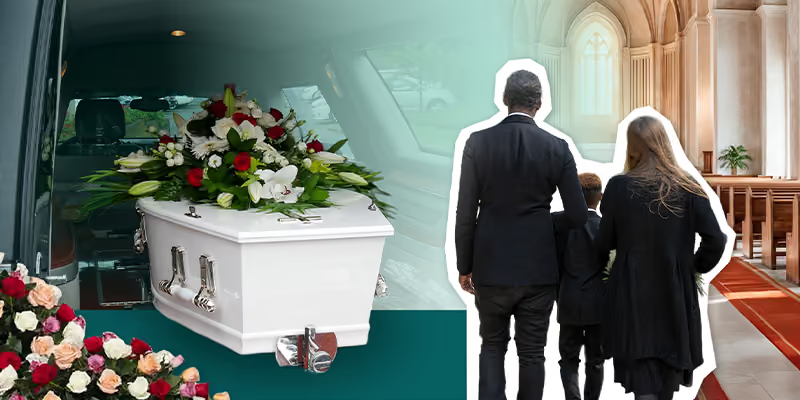

Lockdown rules and social gathering restrictions are tough enough on Australians. But those who have lost loved ones during the pandemic are especially challenged when it comes to funeral ideas during COVID.
Travel restrictions and social gathering limits have meant families and friends are saying goodbye to the traditional idea of church and chapel funerals during the pandemic. Instead many are coming up with more personalised funeral ideas during COVID to celebrate their person’s life.
Non-traditional tributes are challenging the idea of what a funeral looks like. Rather than missing out on large attended services, families are coming up with some truly memorable funeral ideas during COVID. While the concept of a direct cremation was less common in Australia before the pandemic, separating the cremation from any ceremony has allowed some spectacular tributes.
This article of funeral ideas during COVID explains some ways loved ones have been farewelled after lockdowns and social gathering restrictions have eased.
Funeral ideas during COVID lockdown
1. Virtual service
When gathering limits at funerals have been restricted, families that are still wanting a traditional church or chapel send-off are live streaming the funeral service. But it’s generally just as expensive to arrange a traditional funeral with only a few people in attendance as it would be with an unlimited number of mourners present.
A virtual gathering doesn’t need to be in a church or chapel if that’s not what best represents a person’s life. A more affordable alternative is an unattended cremation that allows families to arrange a farewell separately, someplace else – virtually included. There are so many format options for streaming virtually during COVID.
It’s becoming common for families in lockdown to host their entire memorial with a virtual video meeting room like Zoom, with nobody together in person. Virtual memorials allow everyone to participate in the service, read tributes or give a eulogy – they don’t need to be at the meeting host’s location. These online gatherings can still include many of the usual funeral elements like a photo tribute section, music and speeches.
It was my uncle’s first anniversary in the peak of Melbourne’s first COVID-19 lockdown, when we were restricted to 5km and no visitors to the home. Uncle Fred was a religious man, so a Rosary mass in church would usually have been arranged at this time. Rather than streaming from a church mass, his grandkids set up a family Zoom session and shared a YouTube video of the Rosary being led by another church.
About 30 households joined in the virtual mass from their homes to honour Uncle Fred’s life. Despite being in separate homes, it was a heart-warming experience to see everyone’s faces on the screen, united in tribute to my uncle.

2. Ocean scattering
The no-frills aspect of a Bare cremation is ideal for people, like Steve and Linda’s mum, who wished for a more intimate ocean send-off. The siblings said their mum always wanted to be scattered in the ocean - a place she loved, surrounded by those closest to her.
“Mum loved to watch the sunset on the water… there was no need to have an expensive funeral in a stuffy funeral home. That was just not mum. Bare suggested we scatter her ashes on the ocean at sunset… They booked the boat and celebrant. It was just us – Mum’s kids and grandkids.
“We scattered the ashes in the ocean. We then all sat, watching the sun go down and privately remembered mum. I’ll never forget the special way we were able to farewell mum. It was just perfect.”
Bare supported another family to hold a scattering service on the beach during COVID lockdown. There were only four people there, but we arranged for the ceremony to be filmed and live-streamed so family members all over Australia could be part of the farewell.

3. Collaborative photo slideshow
A heart-warming part of any funeral is usually watching a photo slideshow of fond memories of the deceased. Today’s technology allows so many options to collaborate and share photos and videos online.
Setting up a collaborative photo album allows friends and family to select and contribute pictures to the slideshow digitally. Sifting through old photo albums can also be a lovely way to reflect and remember loved ones who are no longer with us too.
Once the album is complete, the slideshow can be accessed by anyone, at any time.
4. Sing or play a favourite song together
A song can evoke strong memories and take you back to a special moment in time. In the same way that we pause for a minute’s silence at 11am on Remembrance Day, families and friends in lockdown have united in their grief by singing or playing a loved one’s favourite song at the same time, while in separate locations.

5. Enjoy a favourite meal in tribute
Was your Nan famous for making the best casserole or did she bring trifle to every family gathering? Recreating a loved one’s signature dish can be another way to celebrate a loved one’s legacy.
If restaurants are open for table service, you might prefer to book a table at a family favourite spot and raising a glass to your person’s special life.
6. Arrange the cremation now and memorial later
An unattended or ‘bare’ cremation decouples the burial or cremation from the gathered ceremony. The dignified direct cremation can happen in the next few days after passing, allowing families and friends the time to plan a celebration of life or memorial event once restrictions have eased and more people can attend. This can happen at any time – in the weeks or months to follow.
Many people are postponing the memorial until restrictions ease, choosing a special date like the deceased person’s birthday, to hold the celebration of life. One family we arranged a Bare cremation for is planning to scatter both Mum and Dad’s ashes together on their wedding anniversary, now that both parents have passed.
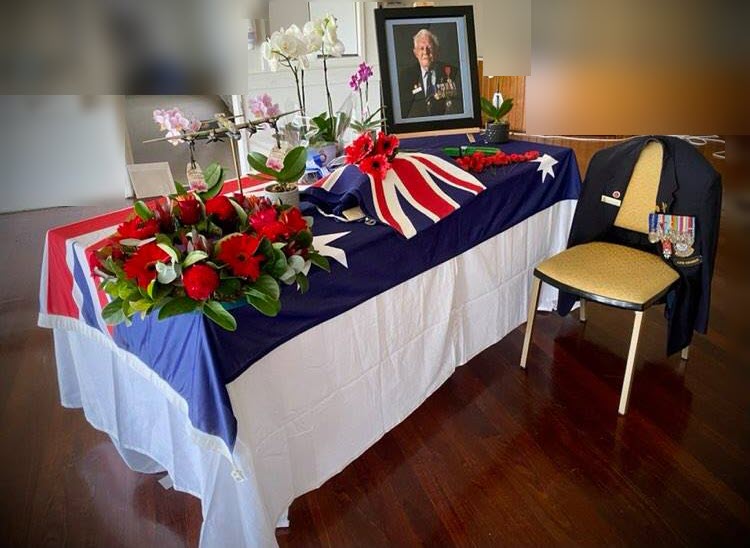
When considering funeral ideas during COVID, a memory table with a photograph of the deceased and the ashes can be a lovely focal point in place of a coffin. As each life is unique, the memory table can be decorated to represent the deceased person’s passions and hobbies. Linda arranged this for her father's farewell.
As lockdowns lifted in Brisbane, Linda booked a venue to farewell her dad Laurie, a 98-year-old veteran. With a Bare cremation previously arranged, a venue booking gave Linda the peace of mind that she could postpone the memorial if rules changed. She took her time to rally the troops and plan an honourable farewell befitting of a decorated military hero.
“We arranged his memorial once we had his ashes and held the interment immediately after. In these uncertain COVID days and having just come off a lockdown and funeral restrictions, it was a comfort to know we could put his memorial on hold if restrictions increased,” Linda said.
“We held his funeral in a venue which allowed more guests than the funeral chapels and set it up with his ashes in place of a coffin. As his funeral had military aspects due to his heroic war service, the air force and RSL provided the flags under and over his ashes as well as tributes.
“There was literally no difference in the respect and reverence offered by the attendees and felt by the family. We gave Dad the send-off he deserved without any of the additional pain.”
Can I plan a funeral during COVID?
Determining if you can plan a funeral during COVID will depend on your location and date of the service.
Be mindful that memorials and wakes can be classified separately from 'funerals'. A funeral or memorial held at a home or private residence is generally restricted to private gathering limits in that region and must follow household gathering limits. This means, if for example only five vistors to the home are permitted per day, that rule will apply to any service held at the home.
A wake or memorial held at a venue, such as a restaurant or community centre, will usually depend on the venue’s density quota and the person-per-square-metre rule that currently applies for that region.
Social gathering rules at public outdoor locations also have their own rules, which differ from region to region.
The rules around social gatherings change quickly and it can be difficult to keep up. Check your state government website for the most up-to-date advice about public gatherings, travel restrictions and masks, like COVID-19 Victoria here or COVID-19 NSW here.
Of course, if you are feeling unwell or have flu symptoms, stay home.
Can I go to a funeral during COVID?
Determine if you can go to a funeral during COVID in the same way as figuring out if you can plan a funeral in your area, as explained above.
It is also important to observe travel restrictions that may apply. In some areas, travelling to attend a funeral may be permitted. To be safe, check the current government advice in your location.
The challenges of saying goodbye during lockdowns reminded many families that even simple farewells can be deeply meaningful. If you are arranging a farewell for a loved one and prefer a simple option, our team supports families across Australia with dignified options such as direct cremation, including families in Brisbane and the Sunshine Coast.
To find out how Bare can support your family to farewell a loved one during the pandemic, visit the Bare Services webpage, or have a chat with our arrangers on 1800 071 176.
Disclaimer: This article provides general information only and does not constitute professional advice. Please consult a qualified expert for guidance specific to your situation.
Learn more in our Resource Centre.
If you’re feeling overwhelmed, we’re here to help you through it. Our Resource Centre shows plenty of ways forward.