
A burial is the act of burying a person after death by placing them into the ground at a cemetery or designated burial site. It involves the physical interment of the body, which is within a coffin or casket and is one of the oldest and most widely practised ways of laying someone to rest.
While burial refers to the act itself, it is often accompanied by other arrangements, such as a funeral service or a simple ceremony that allows family and friends to gather and say goodbye.
The burial process
The burial process begins once burial has been chosen as the final arrangement. This process is coordinated by a licensed funeral director, who works with the family and relevant authorities to ensure all legal and practical requirements are met.
This usually involves coordinating burial details, including choosing a coffin or casket and completing required burial documentation such as burial application and the Medical Cause of Death Certificate, while the family works directly with the cemetery to purchase a burial plot.
Cemeteries in Australia are managed by local councils, trusts, or private operators, and availability can influence when a burial takes place, alongside family preferences and any cultural or religious practices.
Once arrangements are finalised, the coffin is transported to the cemetery on the day of the burial in a suitable vehicle, most commonly a hearse. At the cemetery, it is taken to the graveside and lowered into the selected plot by cemetery staff or with mechanical lowering equipment in accordance with cemetery regulations.
Other burial preparations
In addition to the core arrangements, there are other preparations that may apply in certain situations, depending on cemetery requirements, timing, and family preferences.
Some cemeteries require a burial vault or grave liner, which is placed around the coffin once it is lowered into the grave. These outer supports help maintain the stability of the ground over time and support ongoing cemetery maintenance. Requirements vary between cemeteries and are not universal.
Preparation of the deceased may also include embalming in certain circumstances. Embalming is required for above-ground burials in mausoleums and is sometimes chosen when there is a viewing, a delay before burial, or specific cultural or religious considerations. It is not required for all burials and is not part of every arrangement.
Common types of burial
Traditional ground burial
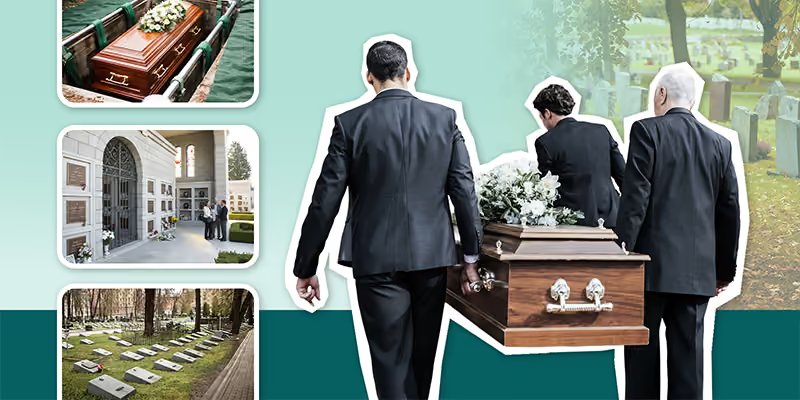
Traditional ground burial involves placing the deceased in a casket and interring it below ground in a designated cemetery plot. The grave may be marked with a headstone, monument, or marker, depending on cemetery regulations. This type of burial may follow a funeral or graveside service, though a service is not required.
Green or natural burial
Green burial refers to a form of ground burial that limits or avoids embalming, burial vaults, and non-biodegradable materials which has a lower environmental impact compared to traditional burial. The deceased is typically placed in a biodegradable casket or shroud. This type of burial is only permitted in certain cemeteries and is subject to specific environmental and regulatory requirements, which vary by location.
Mausoleum or crypt burial
In a mausoleum or crypt burial, the casket is placed above ground within a mausoleum structure or wall crypt. Mausoleums may be indoor or outdoor and can contain single or multiple crypts. This option does not involve ground interment and follows cemetery-specific placement and construction rules.
Lawn burials
Lawn burials take place in cemeteries that require flat markers set level with the ground rather than upright headstones. These cemeteries typically follow uniform landscaping standards and have specific rules regarding marker size, material, and placement.
Family plot or private land burial
A family plot burial occurs in a cemetery area reserved for multiple members of the same family. In some areas, burial on private land may be permitted, though it is less common and requires compliance with local laws, zoning regulations, and documentation requirements.
Burial services and ceremonies
A burial is often accompanied by a funeral service. This is the ceremonial part of the process, where family and friends gather to say goodbye. A service may take place at a funeral home, place of worship, or at the graveside, either immediately before the burial or on a separate day.
Some families choose to arrange a viewing beforehand, which gives people the option to see their loved one and say goodbye in a more private setting. For some, this can be helpful in their grieving process. Depending on the circumstances and the family’s wishes, preparation of the deceased such as dressing and embalming may be arranged by the funeral director.
Services may follow religious or cultural traditions, or they can be simple and informal. Families can decide the venue, whether the service is led by a religious representative, celebrant, or family member, and the order of service. Music, readings, prayers, or short tributes are often included, though none of these elements are required.
It is also possible for a burial to take place without a formal service or ceremony at the cemetery. This is sometimes referred to as a private, unattended, or direct burial. In these cases, families may choose to hold a memorial later.
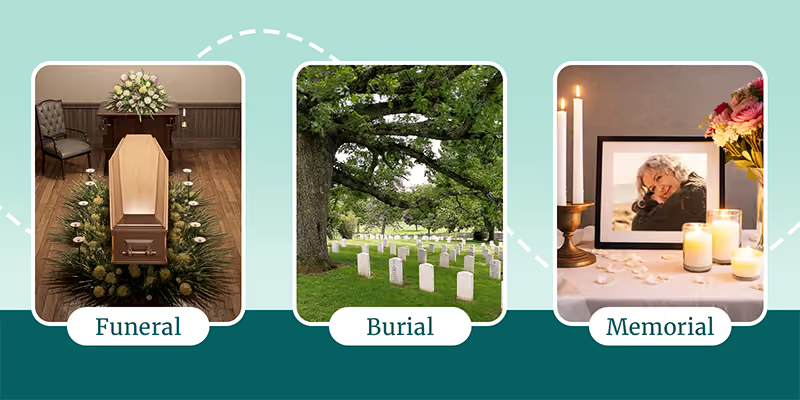
Learn more about the differences between a burial, a memorial, and a funeral.
Ultimately, the choice often reflects personal preference, beliefs, and the wishes of the person who has died, and may also influence how families consider other end-of-life options.
How burial and cremation differ
Burial and cremation are the two primary methods of final disposition, each defined by how the body is cared for after death. Burial involves placing the body in the ground or a mausoleum, while cremation reduces the body to ashes through high heat.
Burial typically includes expenses such as a casket, burial plot, vault, and cemetery fees, while cremation usually involves fewer required items and lower overall costs, with memorial choices handled separately. The two also differ in preparation, long-term care, and memorial practices, which are often influenced by cultural traditions, religious beliefs, and family preferences.
Choosing a burial
Choosing a burial involves practical decisions as well as personal considerations. Some families follow tradition. Others focus on simplicity or environmental factors.
There are a few common ways a burial may take place. Some families hold a service at a chapel or place of worship and then travel to the cemetery for the burial on the same day. Others choose a graveside service, where family and friends gather at the cemetery for a shorter farewell. Some families keep the burial private and hold a memorial at a later time.
Understanding these options can help with planning.
How to arrange a burial with Bare
You can simply call us on 1800 071 176 at any time, 24/7, and one of our arrangers will guide you through the next steps. While burial plots are arranged separately, our arrangers can explain how the process works and suggest some cemeteries.
Our funeral process is simple, dignified, and trusted. We keep you informed at every stage so you always know where your loved one is, right through to their final resting place.
Bare burial services are available in selected areas of New South Wales, Victoria, and Queensland. Please speak with your arranger for guidance on availability or visit Bare Burials page.
What is the Bare Burial process?
1. We’ll assist with the initial arrangements.
After you call to notify us of the death, we’ll take care of the rest. We’ll coordinate with the necessary authorities and organise to bring your loved one into our care. We’ll also handle the required documentation, and guide you through completing any necessary paperwork.
2. We’ll help guide you through burial preparations.
We’ll take care of your loved one and support you through the burial preparation process, including arranging a simple, high-quality coffin suitable for interment. While families choose and purchase the burial plot directly with the cemetery, we’re here to provide guidance and share helpful information along the way. In some cases, embalming may be recommended by the mortician, such as when a viewing is planned or depending on the condition of the deceased. Rest assured, we’ll be treating your loved one as if they’re our own.
3. We’ll be there on the day of the burial.
On a scheduled day, our dedicated team will accompany your loved one to the cemetery for an unattended, respectful burial in the case of Bare Burial.
Graveside Burial Services also include a cemetery service for family and friends, who can attend the burial to say a final goodbye in the peace, nature and open air of the cemetery. While Dual Service Burials include a traditional, personalised funeral service in a church or chapel, followed by a graveside service.
4. We’ll provide ongoing care after the burial.
We’ll give you the important documents you need, including the death certificate. Plus, we’ll continue to care for you through Bare Aftercare, including free grief counselling sessions, wills and estates advice, support to close accounts and much more, for as long as you need.
Final thoughts
Burial remains a familiar and widely chosen option in many parts of the world. While practices vary, having a clear understanding of what it involves can be helpful when decisions need to be made during a difficult time.
At Bare, we aim to provide guidance and clarity when families are navigating these decisions. If you want to see what services are available in your area, our award-winning team is available 24/7 on 1800 071 176.
Disclaimer: This article provides general information only and does not constitute professional advice. Please consult a qualified expert for guidance specific to your situation.
Learn more in our Resource Centre.
If you’re feeling overwhelmed, we’re here to help you through it. Our Resource Centre shows plenty of ways forward.